

Satellite Tracking Toolkit
Protect your assets in orbit before the risk becomes mission-critical.
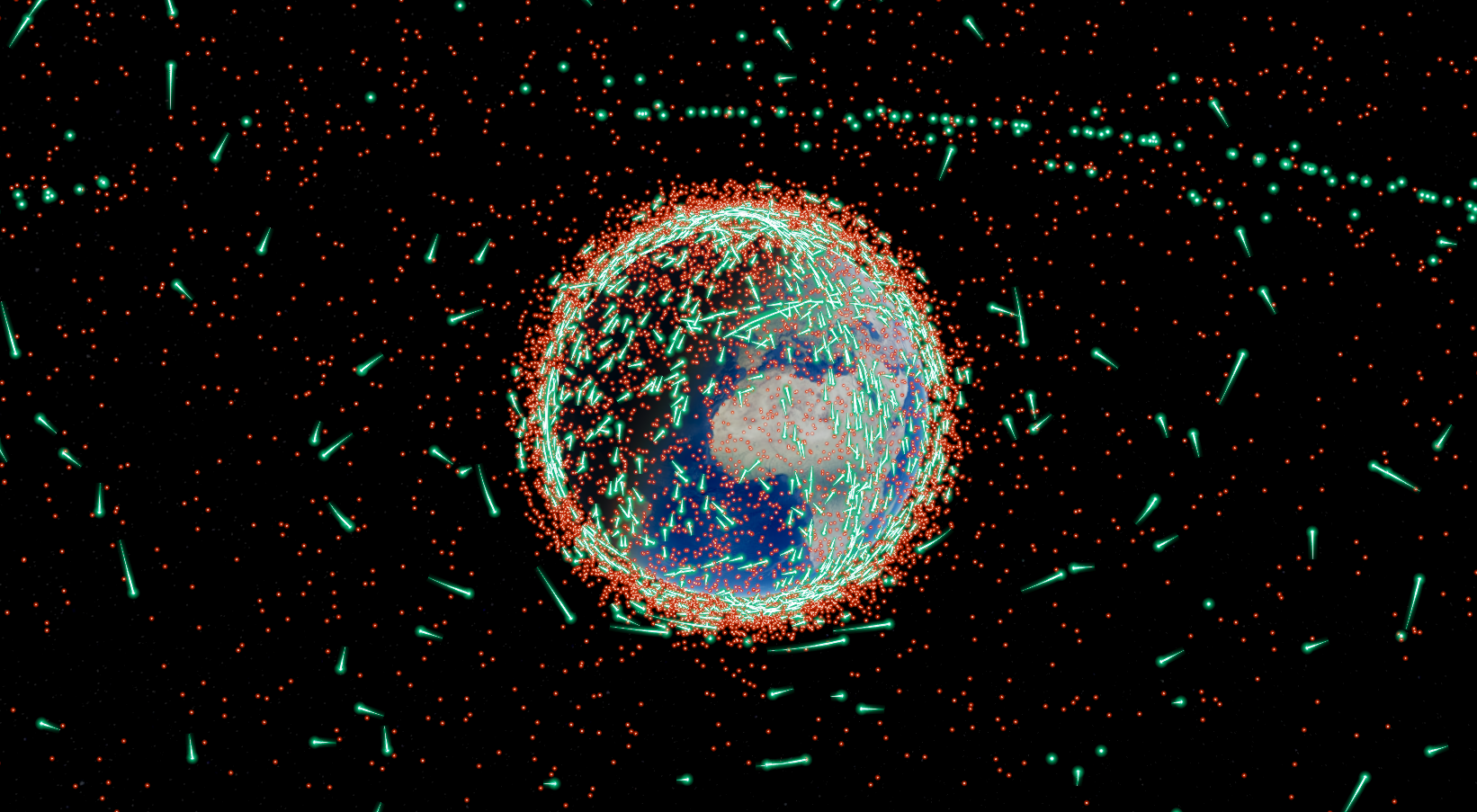
Orbit Guard is the GMSPAZIO platform for Space Situational Awareness and Space Surveillance and Tracking, designed to help satellite operators, civil institutions, and defense organizations monitor, analyze, and protect space assets.
In an increasingly crowded orbital environment, Orbit Guard transforms observations, tracking data, and information from diverse sources into a clear operational picture, useful for planning activities, assessing risks, and supporting rapid decisions.
Introduction to the System
From orbital data to mission protection
Knowing the position of an asset in space is not enough. You need to understand where it will be, what is approaching it, and what risks could compromise mission continuity.
Orbit Guard was created to meet this need: collecting, integrating, and processing data to transform it into operational information.
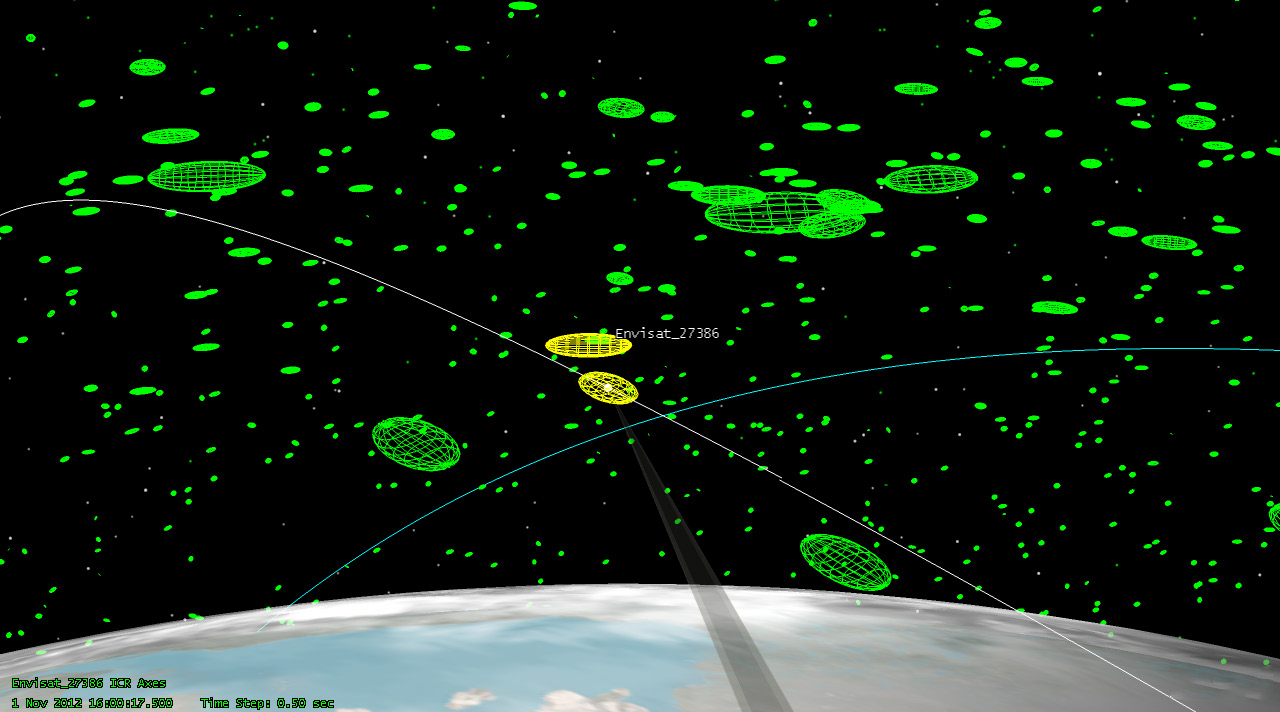
The platform supports planning, scheduling, acquisition, data processing, orbit determination, conjunction assessment, and collision risk analysis.
The result is a flexible, modular, and customizable tool designed to simplify the management of complex SSA/SST scenarios.
What It Solves
Greater control over objects in orbit
Orbit Guard transforms raw data into operational decisions.
It allows for planning observations, coordinating acquisition activities, integrating measurements from various sensors and sources, updating orbital information, and assessing potential criticalities for the assets to be protected.
In this way, operators and analysts can work with more organized data, clearer scenarios, and outputs that are closer to action.
<p>Organize observation and acquisition activities, reducing overlaps and optimizing the use of available resources.</p>
</p>
<p>
How It Integrates
Flexible architecture, interoperable data
Orbit Guard is designed to integrate into different operational environments without imposing a rigid structure.
The platform can work in a standalone or networked configuration, with existing sensors, remote observation systems, external data sources, and third-party tools.
The plug-and-play approach allows for the enhancement of existing infrastructure and the addition of new capabilities over time.
Orbit Guard can interact with Ansys STK and ODTK technologies for mission-level analysis, orbital propagation, orbit determination, and advanced assessments, maintaining a consistent operational flow between acquisition, analysis, and reporting.
Output
Actionable operational insights
Orbit Guard transforms complex data into clear, immediately usable outputs for analysis, control, and decision support activities. The platform can generate information products and reports dedicated to observation planning, processing astrometric data from telescopic images, space object identification and correlation, and orbit determination.
It also supports catalog updates, orbital conjunction and collision probability assessments, as well as atmospheric re-entry analysis. Results can be presented through graphs, dashboards, and operational reports, also compliant with EUSST standards when required.
The goal is to offer operators and decision-makers a clearer reading of the scenario, reducing information noise and highlighting elements that require more attention.
Training
Operational training for SSA/SST teams
Orbit Guard can be accompanied by dedicated training paths for operators, analysts, and technical teams. The training helps in understanding the complete workflow: from observation planning to data management, and from orbital analysis to risk assessment.
Basic Training
Introduction to Orbit Guard, SSA/SST, catalog management, observations, and reading the main outputs.
Advanced Training
In-depth look at sensor tasking, astrometry, orbit determination, conjunction assessment, re-entry analysis, and reporting.
Custom Training
Paths built on real customer scenarios, focusing on specific assets, sensors, workflows, and operational requirements.

Request an operational demo
Take control of your space operations.
